Contract farming, without the middleman
Fair prices for farmers. Reliable supply for buyers.
Krishi Setu connects Indian farmers directly with companies, retailers and wholesalers — with a government Minimum Support Price floor that the system refuses to let any contract fall below.
Browse open contracts →
₹2,585 / quintal
Every wheat contract on Krishi Setu starts here or above. The database will not accept less.
The problem
The mandi chain takes the margin, and the farmer takes the risk.
Most produce in India passes through several intermediaries before it reaches a buyer. Each one takes a cut, and none of them carry the risk of a bad season.
Prices set by someone else
A farmer arriving at the mandi finds out the rate on the day, with no way to plan a season around it.
Income that swings every season
Without a committed buyer, the same field can be profitable one year and a loss the next.
No visibility either way
Farmers cannot see who is buying. Buyers cannot see who is growing, or verify quality before it arrives.
Produce lost after harvest
With no buyer arranged in advance, crops wait in the open while a price is negotiated.
How Krishi Setu is different
A floor that is enforced, not promised.
Plenty of platforms say they pay fairly. On Krishi Setu the minimum price is a rule inside the database — a contract priced below it is rejected before it is ever saved.
The MSP floor is a database rule
Not a warning on a screen. Every contract and every bid is checked against the government floor by the database itself, so no code path can skip it.
Every rate has a source
Each MSP figure carries the Press Information Bureau release it came from, so any number here can be traced back to the government.
Agreed before the season
Price, quantity, quality and delivery date are settled before sowing, so a farmer plans against a number that will not move.
Direct, both ways
Buyers see the farmers supplying them, and buyers are named on every contract. No layer in between taking a share.
How it works
Four steps, and the floor holds at every one.
- 01
A buyer posts what they need
Crop, quantity, quality and delivery date. The system stamps the MSP floor onto the contract and refuses any price below it.
- 02
Farmers see it and apply
Anyone can browse contracts without an account. Applying takes a phone number and a six-digit code.
- 03
The buyer reviews and awards
Applications show the farmer, their district, land size and how far above the floor they have bid.
- 04
Delivery against agreed terms
The floor that applied on the day of signing is stored with the contract, so the agreement stays auditable afterwards.
Credibility
Backed by a government grant.
The MSP guarantee is the centre of this product, so it is built to be checked rather than trusted. Every rate in the system names the government release it came from.
- Rates cite their Press Information Bureau release ID
- The price floor is enforced by the database, not the interface
- Twelve Indian languages, from the first screen
For farmers
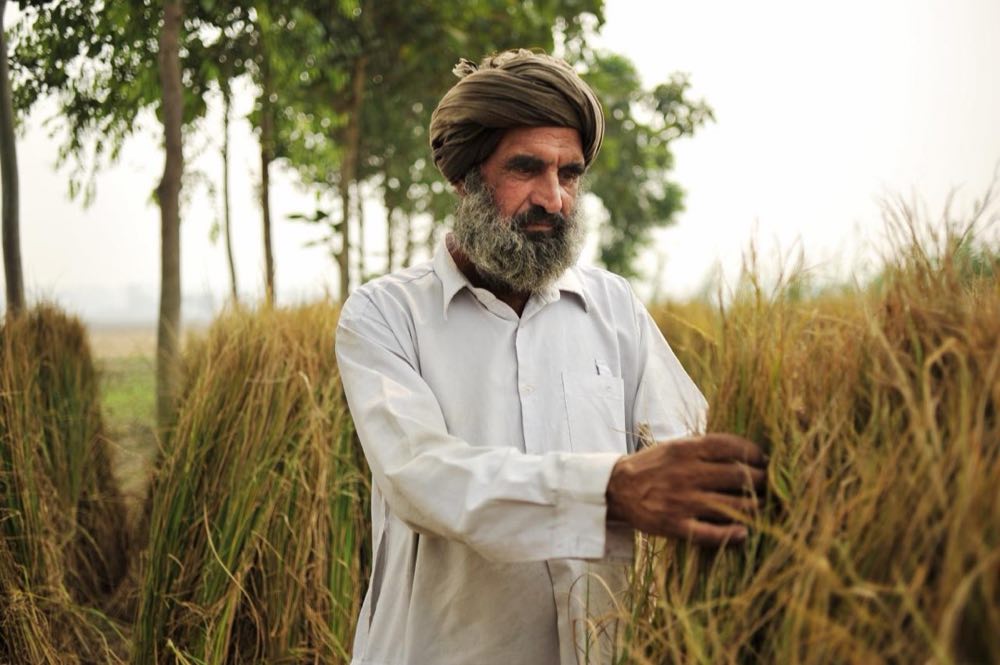
Find a buyer before you sow, at a price that cannot fall below the government floor.
- Browse contracts free, no account needed
- Apply with just your mobile number
- See exactly how far above MSP you are bidding
For buyers
Source directly from named farmers, on terms agreed before the season starts.
- Post a requirement in a few minutes
- Compare applicants by price, quantity and district
- Every agreement stores the floor that applied
Start with one contract.
Browsing needs nothing at all. Posting or applying takes a mobile number and about a minute.